

BPC-157, Healing & Regeneration, Peptides
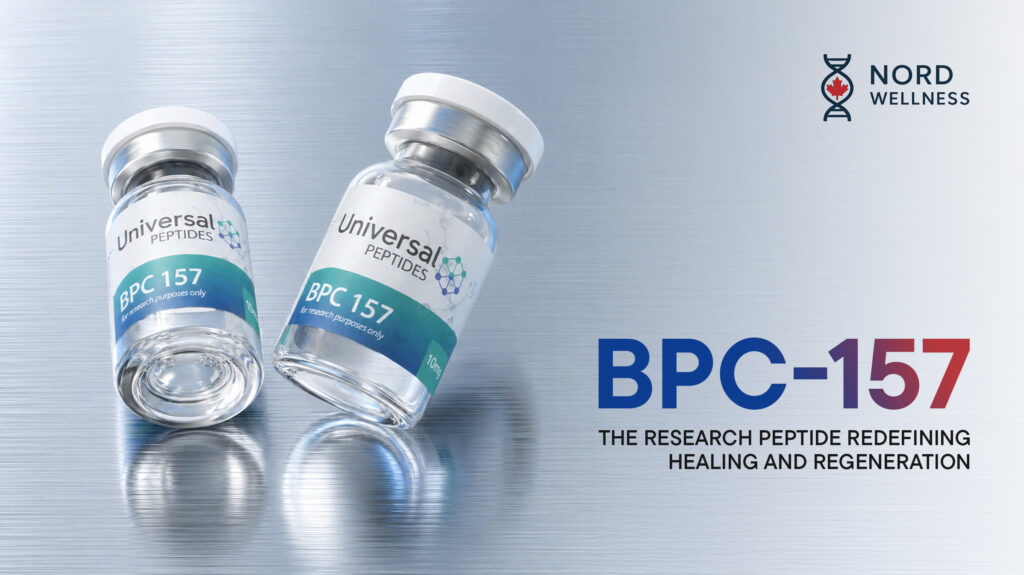
BPC-157: The Research Peptide Redefining Healing and Regeneration
Mar
Among the growing library of research peptides currently being studied in laboratories across North America, few have generated as much scientific interest as BPC-157 peptide. Short for Body Protection Compound-157, this compound is a synthetic peptide. It has become one of the most discussed molecules in regenerative biology, gastroenterology, and musculoskeletal repair research.
For Canadian researchers and institutions seeking reliable access to high-purity peptides, understanding what BPC-157 is is an essential starting point. Additionally, recognizing why its research profile is so compelling provides important context for further study.
What Is BPC-157?
BPC-157 is a pentadecapeptide, meaning it is composed of 15 amino acids. It is derived from a protective protein found naturally in gastric juice. Additionally, its amino acid sequence is partially based on a naturally occurring body protection compound.
Unlike many synthetic compounds, BPC-157 has demonstrated notable stability in human gastric juice during in vitro studies. As a result, it has become a subject of significant interest in gastrointestinal research.
The peptide has been studied in numerous preclinical experiments, primarily in rodent models. These studies examine its effects on tissue repair, wound healing, tendon regeneration, and inflammation modulation.
While preclinical data does not automatically translate to human outcomes, the findings remain notable. Additionally, the volume and consistency of results across studies have made BPC-157 a high-priority compound for ongoing investigation.
Key Areas of BPC-157 Research
Research involving BPC-157 has spanned several biological domains. Here is a summary of the areas that have received the most scientific attention:
Musculoskeletal and Tendon Repair
Multiple animal studies have examined whether BPC-157 accelerates the recovery of damaged tendons, ligaments, and muscle tissue. Research published in peer-reviewed journals has explored the peptide’s interaction with growth hormone receptor expression and its potential role in upregulating key repair pathways at injury sites. This body of research positions BPC-157 as a compound of high interest for sports medicine and orthopedic research communities.
Gastrointestinal Protection
Given its origin as a gastric-derived compound, BPC-157 has been extensively studied for its effects on the gastrointestinal tract. Preclinical research has investigated its ability to support the mucosal lining of the stomach and intestines, with particular focus on ulcer models and inflammatory bowel conditions. According to findings referenced in PubMed’s peptide research database, BPC-157 has demonstrated consistent gastric cytoprotective effects across multiple research models.
Angiogenesis and Vascular Research
One of the more intriguing aspects of BPC-157 research involves its apparent role in angiogenesis — the formation of new blood vessels. Studies have examined whether BPC-157 promotes the upregulation of VEGFR2 (Vascular Endothelial Growth Factor Receptor 2), which plays a central role in wound healing and tissue regeneration. This vascular angle adds another dimension to BPC-157’s research utility beyond its musculoskeletal and gastric applications.
Neurological Research
Emerging preclinical research has also examined BPC-157 in the context of neurological protection and dopamine system modulation. While this area is considerably less developed than the gastrointestinal and musculoskeletal research, it represents a growing frontier that is attracting attention from neuroscience research teams.
BPC-157 and the Research Peptide Landscape in Canada
Canada’s research peptide sector has expanded rapidly over the past several years, driven by increased institutional interest in longevity science, metabolic health, and tissue engineering. For researchers operating within this space, sourcing quality matters enormously — variability in peptide purity can compromise experimental integrity and render results unreliable.
At Nord Wellness, BPC-157 is produced to a minimum of ≥98% purity and is accompanied by third-party verified Certificates of Analysis (COA). Researchers can view the latest COA results directly on the website, offering full transparency into batch quality, purity confirmation, and identity verification. This level of documentation is essential for research institutions operating under rigorous quality assurance standards.
Nord Wellness offers BPC-157 in two formats to suit different research protocols. The BPC-157 10mg lyophilized powder is the standard form — a freeze-dried compound that offers maximum stability during shipping and storage. For research teams exploring alternative delivery modalities. The BPC-157 10mg Nasal Spray Kit provides a convenient pre-formulated option designed for consistent dosing in experimental settings.
For researchers interested in combination protocols, Nord Wellness also offers the popular “GLOW” bundle — BPC-157 10mg + GHK-CU 50mg + TB-500 10mg, which combines three of the most studied healing and regeneration peptides in a single research package. The “KLOW” bundle extends this combination further with the addition of KPV 10mg, a peptide with its own growing literature in immune and inflammatory research.
Why Purity and Sourcing Matter in Peptide Research
The reproducibility of research findings depends heavily on the quality of the compounds used. Low-purity peptides introduce variables that can skew results, lead to false conclusions, and waste valuable research resources. When evaluating a supplier, researchers should prioritise vendors that provide independently verified COAs from accredited third-party labs. Additionally, they should avoid relying solely on in-house assurances.
As noted by Health Canada’s guidance on research compounds, materials used in research settings must meet appropriate quality standards, even when not intended for therapeutic use. NordWellness operates with full compliance to Canadian distribution standards, and all products are clearly labeled for research and educational purposes only.
Accessing BPC-157 for Research in Canada
For Canadian research teams looking to incorporate BPC-157 into their studies, NordWellness provides fast, nationwide shipping. The company fulfills orders from its domestic fulfillment center.
Additionally, standard delivery takes 2–5 business days, with express options available. All orders include full documentation and are backed by NordWellness’s quality guarantee.
To explore the complete range of available healing and regeneration peptides — including TB-500, GHK-CU, and combination bundles — visit the Nord Wellness All Peptides page. For direct inquiries about bulk orders, custom formulations, or institutional purchasing, the Nord Wellness contact page is the best point of entry.
As peptide science continues to evolve, BPC-157 remains one of the most rigorously studied compounds in the field.
Additionally, researchers continue to reference it widely across studies. For researchers committed to working with verified, research-grade materials, it represents a compelling subject for continued investigation.
Disclaimer
This content is provided by Nord Wellness for educational and research purposes only. DSIP is not approved for the diagnosis, treatment, cure, or prevention of any disease.


Great article—really like how it explains BPC-157 as a peptide that works through multiple healing pathways rather than a single mechanism. The connection between angiogenesis, blood flow, and tissue repair makes the whole regeneration concept much clearer.
I appreciate how the article highlights its role in different types of tissue repair. From what I understand, BPC-157 has been studied across tendons, muscles, and even the gastrointestinal tract, which shows how broad its biological activity might be.
Very informative read. I see BPC-157 as a good example of how peptide research focuses on supporting the body’s own repair systems, although it’s also clear that most of the current evidence is still preclinical and needs further validation.